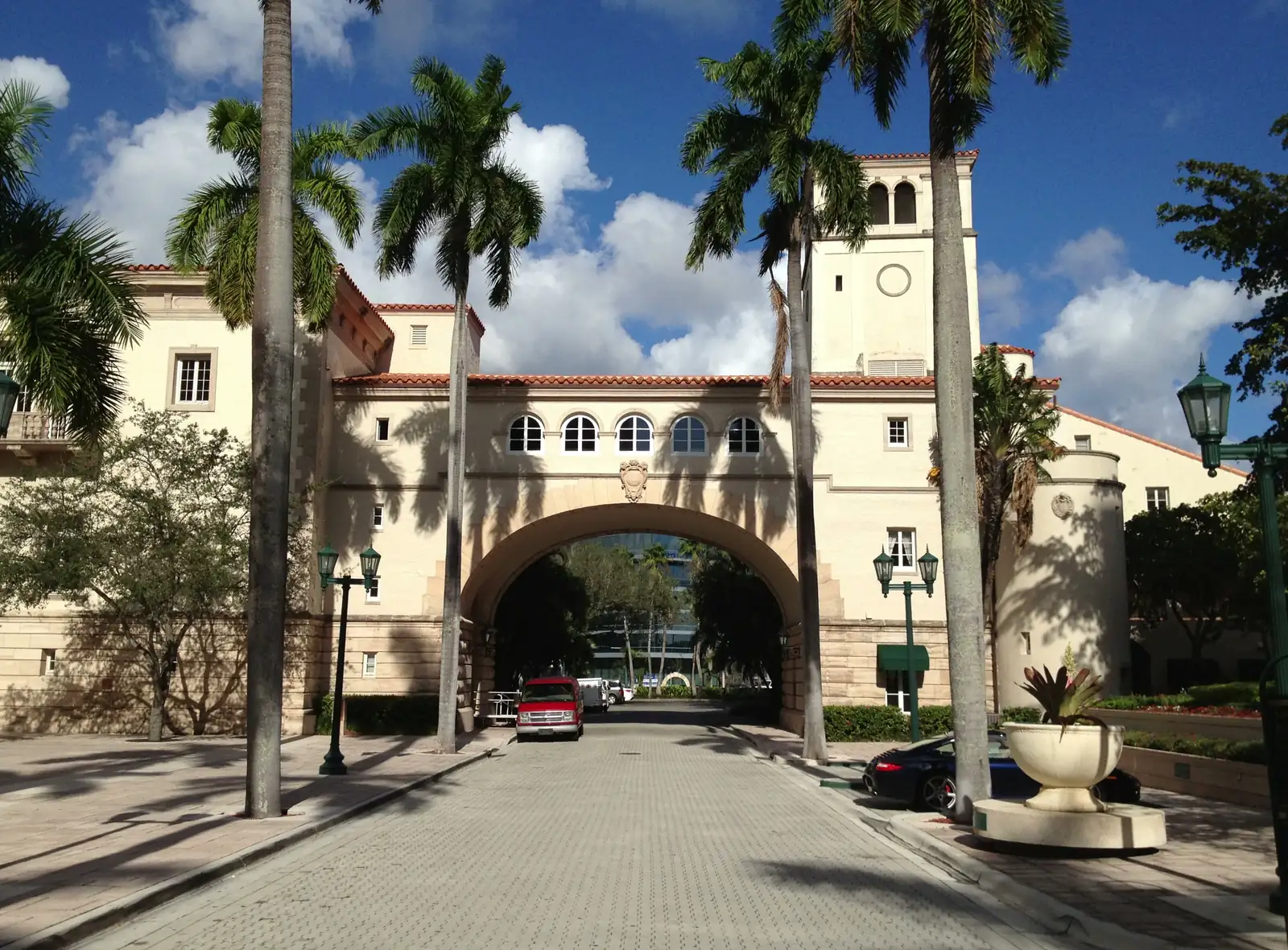
This page tells the history of Coral Gables, Florida, and the buildings that carry it, from the City of Coral Gables’ own history and landmarks pages and from the venues themselves. We read each source on October 20, 2026. Where sources disagree, we say so, and where no primary source covers a landmark, we leave the details out.
Merrick House and a name made of coral rock
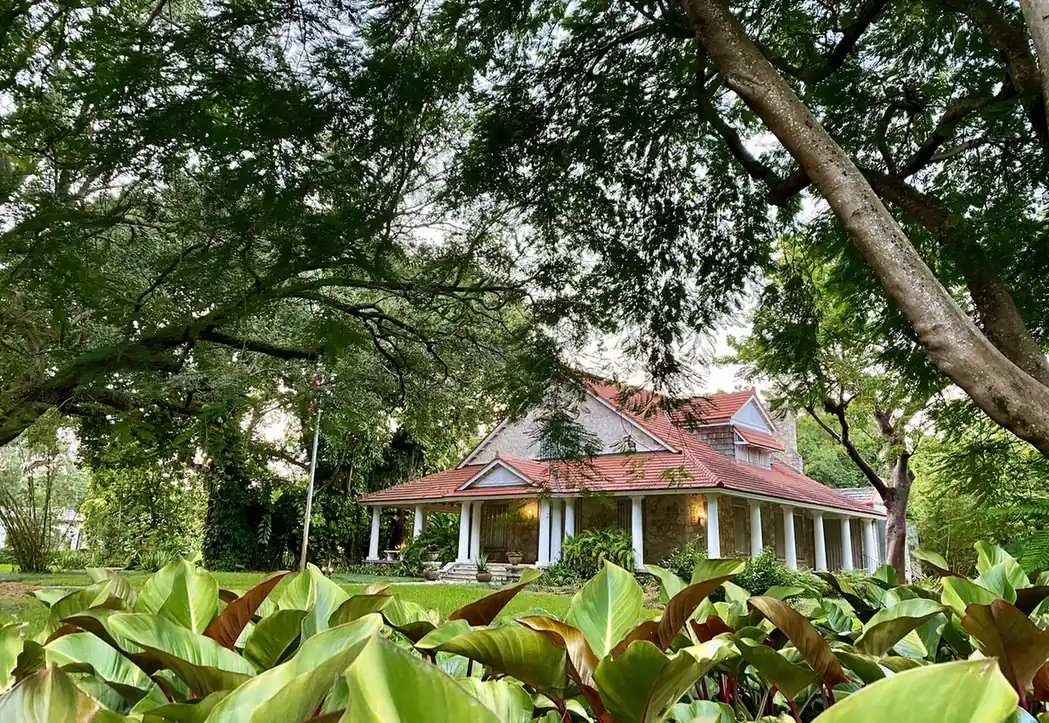
Coral Gables began as a family grove. The City says Merrick House was the home of the Reverend Solomon G. Merrick, Althea Fink Merrick and their six children, of whom George was the eldest son. The family built an addition of native coral rock quarried from what would later become the Venetian Pool, and on its completion in 1910 they named the house Coral Gables and their grapefruit groves the Coral Gables Plantation. The City says that early use of coral rock influenced the naming of the home, the community and the city.
- The City's landmarks page: Merrick House was home to the Reverend Solomon G. Merrick, Althea Fink Merrick and their six children; George was the eldest son. "Upon its completion in 1910, the Merricks named it 'Coral Gables'" and the groves the "Coral Gables Plantation." The early use of coral rock "influenced the naming of the home, the community, and the city." It "is currently operated by the City as a house museum, with tours given by volunteer docents." City of Coral Gables: Historical Landmarks
- Per the City, the Merricks built an addition to their cottage of "native coral rock quarried from what would later become Venetian Pool" and "named their new home 'Coral Gables,' and their growing grapefruit groves the 'Coral Gables Plantation.'" City of Coral Gables: History of Coral Gables
Merrick House, at 907 Coral Way, is now a City house museum with tours by volunteer docents on Saturday and Sunday at 1, 2 and 3 p.m. Tickets are cash only, $5 for adults.
- The City lists Merrick House at "907 Coral Way, Coral Gables, FL", phone 305-774-0155. "Guided Tours Are Weekends Only": "Hours for tours: Saturday and Sunday, 1 p.m., 2 p.m., and 3 p.m. No reservation necessary. Cash only." Group tours need two weeks' notice by email to merrickhouse@coralgables.com. City of Coral Gables: Merrick House
- Merrick House tour ticket prices on the City page: "Adults: $5", "Seniors & Military: $3", "Students (over 12): $3", "Students (under 12): $1", "Children (under 6): Free". City of Coral Gables: Merrick House
George Merrick’s plan
The City says that by 1920 Merrick had grown his land holdings from 160 acres to 1,600 acres, and that by early 1921 Coral Gables was wholly mapped out on paper, with the first lots sold later that year. The Biltmore says Merrick called his vision for the place The City Beautiful, and the City still uses the name.
- Per the City, "By 1920, Merrick had expanded his land holdings from 160 acres to 1,600 acres"; "By early 1921, Coral Gables was wholly mapped out on paper. The first lots were sold later that year." City of Coral Gables: History of Coral Gables
- The City's own landmarks link reads "Experience the rich history of the City Beautiful," and the Biltmore says Merrick called his vision for Coral Gables "The City Beautiful." City of Coral Gables: Historical Landmarks; The Biltmore Hotel: About
He did not plan it alone. The City credits three people in particular:
- Denman Fink, Merrick’s uncle and Art Director of the Coral Gables Corporation, with the design of landmarks such as the Venetian Pool and City Hall, and the entrances, plazas and public spaces.
- Phineas Paist, the Supervising Architect, with carrying the designs to completion.
- Frank Button, landscape architect, with laying out the winding drives, tree-lined boulevards and grand entrances.
- The City credits Merrick's uncle Denman Fink (Art Director of the Coral Gables Corporation) with the design of landmarks such as Venetian Pool and City Hall and the entrances, plazas and public spaces; architect Phineas Paist (Supervising Architect) with carrying the designs to completion; and landscape architect Frank Button with laying out the winding drives, tree-lined boulevards and grand entrances. City of Coral Gables: History of Coral Gables
Built fast, in stone
The City says much of Coral Gables was built at a meteoric speed between 1921 and 1926, and that a significant portion of the workers were stonemasons from the Bahamas, experts in coral rock construction. The site of today’s Coral Gables High School was then a tent city for construction workers. By the time the city was incorporated on April 29, 1925, the City says, building permits had passed $25 million and the assessed valuation was more than $90 million.
- Per the City, "Much of Coral Gables was built at a meteoric speed between 1921 and 1926," and "a significant portion" of the workers "were stonemasons from the Bahamas who were experts in coral rock construction." The site of Coral Gables High School was then a tent city for construction workers. City of Coral Gables: History of Coral Gables
- The City's history page: "By the time the city was incorporated on April 29, 1925, building permits had amounted to more than $25 million, and the assessed valuation was more than $90 million." City of Coral Gables: History of Coral Gables
What Mediterranean Revival means here
The City describes its civic landmarks in the Mediterranean Revival style, built of native oolitic limestone, and its history pages call the same local stone coral rock. The landmarks below are the examples the City itself names.
City Hall, 1927 to 1928
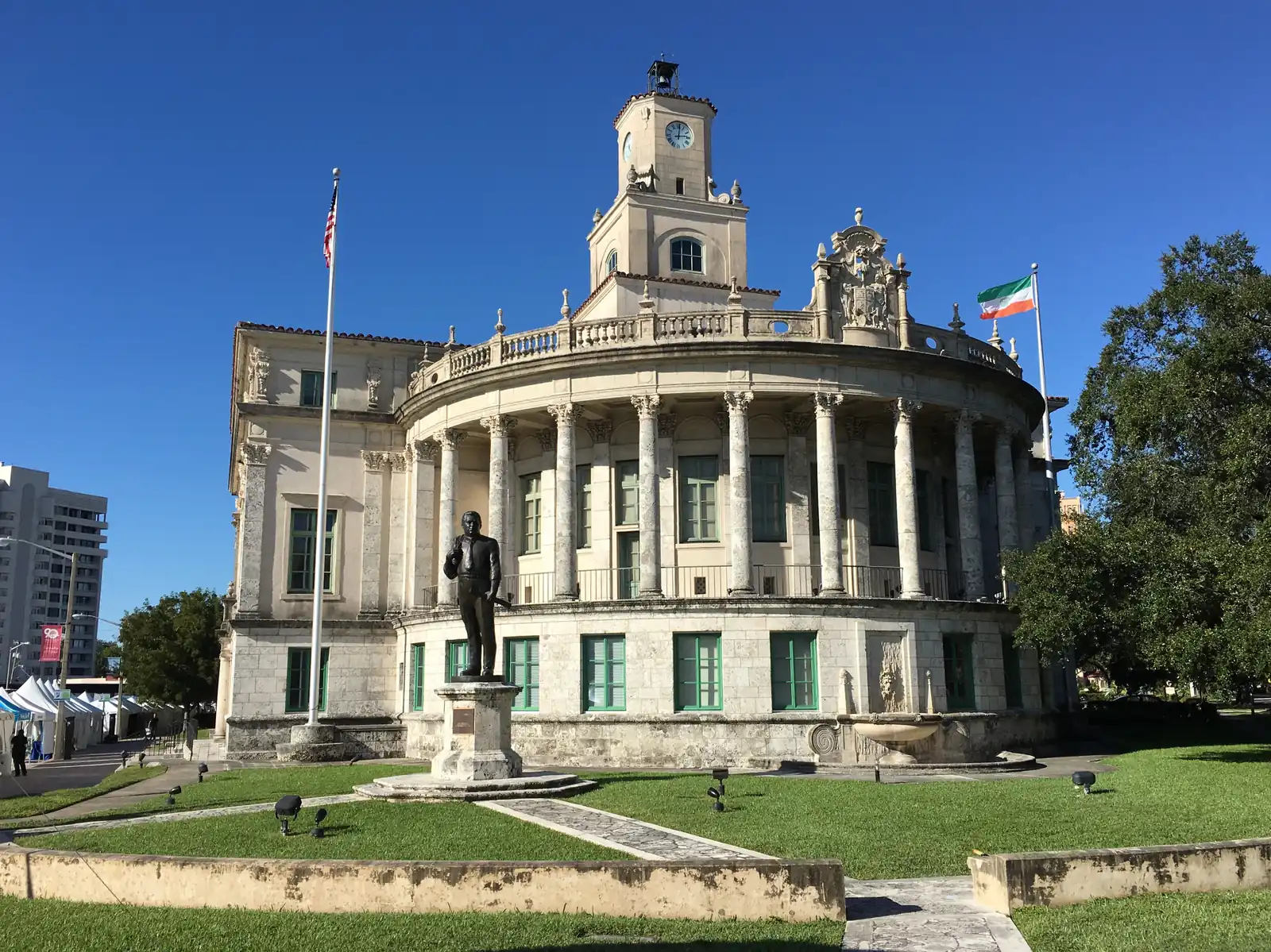
The City says Coral Gables City Hall was built from 1927 through 1928, designed by Phineas Paist and Denman Fink in the Mediterranean Revival style using native oolitic limestone, and has served as City Hall since it opened in 1928. It stands at 405 Biltmore Way, at the west end of Miracle Mile. In season, the City’s Farmers Market sets up in front of it.
- The City's landmarks page: "Coral Gables City Hall was constructed from 1927 through 1928"; it was designed by Phineas Paist, "the Supervising Architect of Coral Gables," and Denman Fink, "the Art Director of Coral Gables," in the Mediterranean Revival style using native oolitic limestone, and it has served as City Hall since opening in 1928. City of Coral Gables: Historical Landmarks
- The City gives City Hall's street address on its Farmers Market page: the market is "located in front of City Hall at 405 Biltmore Way." The City's historical landmarks page says City Hall "was constructed from 1927 through 1928" and was designed by Phineas Paist and Denman Fink in the Mediterranean Revival style, "utilizing the native oolitic limestone." City of Coral Gables: Farmers Market at Merrick Park; City of Coral Gables: Historical Landmarks
The entrances
Merrick planned grand entrances to the city. The City says that of the eight planned, only four were completed.
- Douglas Entrance, also known as La Puerta del Sol: built between 1925 and 1927 to designs by Walter DeGarmo, Phineas Paist and Denman Fink, in the Mediterranean Revival style.
- Granada Entrance and Alhambra Entrance: built by George’s brother, Charles Merrick, two of the four entrances completed in the 1920s, per the City.
- Per the City: "Of the eight planned entrances, only four were completed." The Douglas Entrance, "also known as La Puerta del Sol," was built between 1925 and 1927 to designs by Walter DeGarmo, Phineas Paist and Denman Fink in the Mediterranean Revival style. City of Coral Gables: Historical Landmarks
- Per the City, George's brother Charles Merrick built the Granada and Alhambra Entrances, "two of the four entrances completed in the 1920s." City of Coral Gables: History of Coral Gables
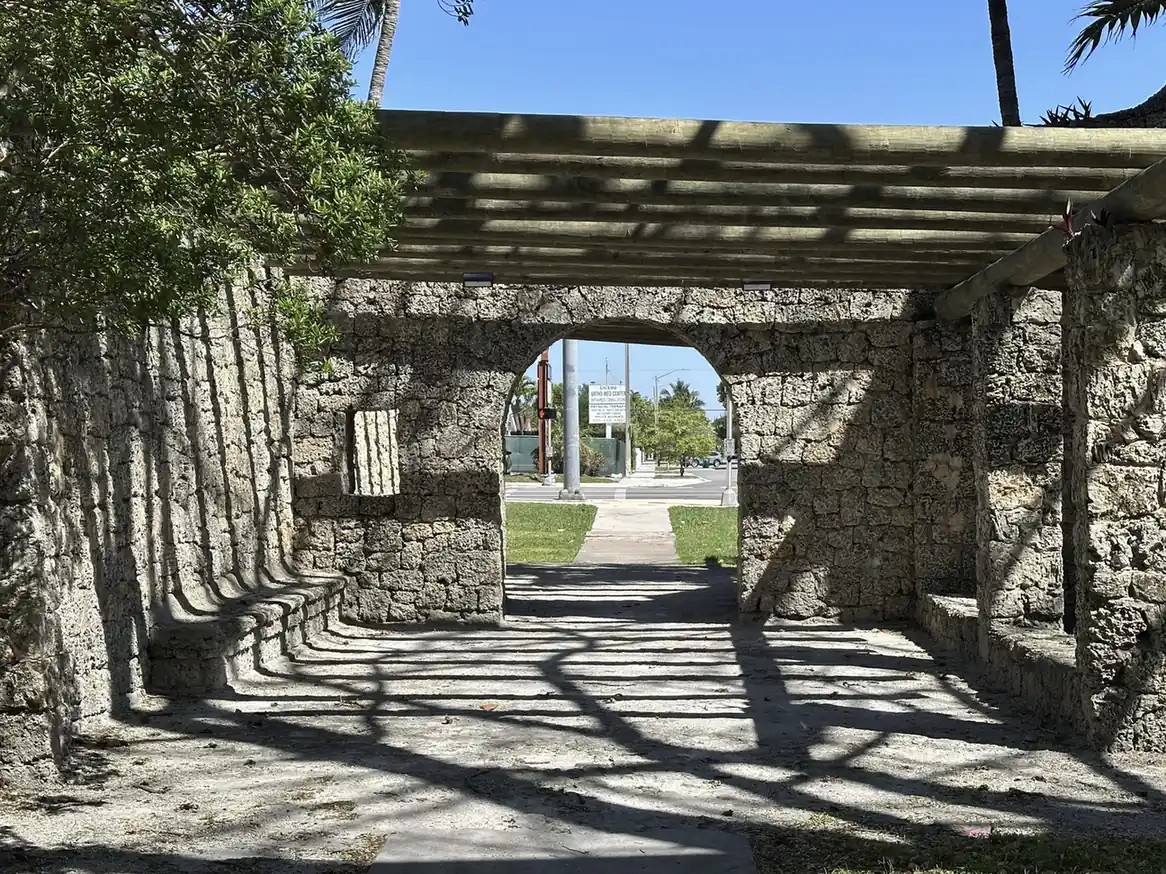
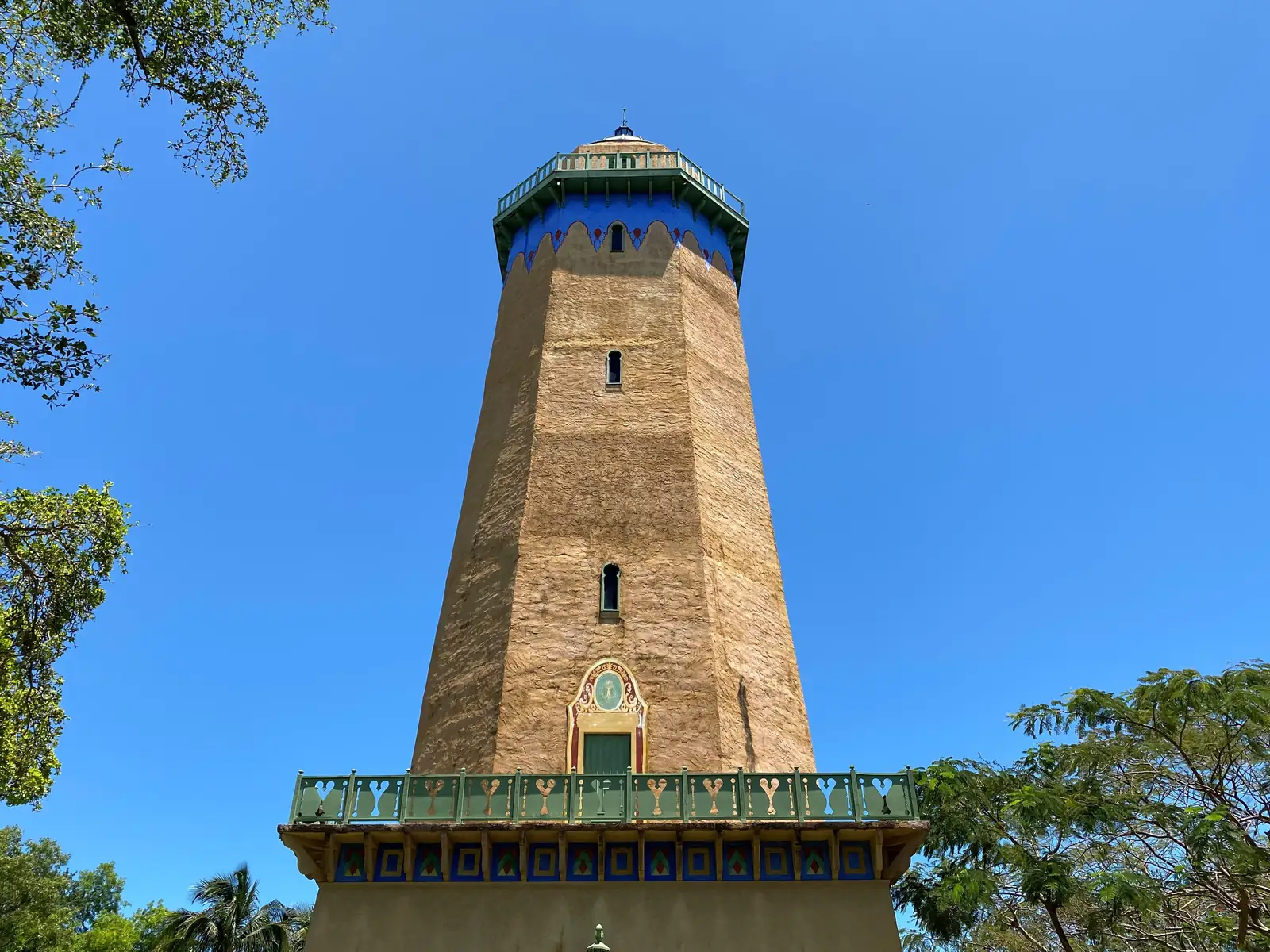
We did not read a primary source for the other completed entrance, or for the Alhambra Water Tower and the De Soto Fountain, so we give no dates or designers for them here. The City’s pool FAQ does mention the De Soto Fountain roundabout by the Venetian Pool entrance.
- Venetian Pool FAQ: depth "ranges from 2 feet at the shallowest end to 8 feet at the deepest"; there are two parking lots in front, one beside the facility and one "across from the entrance gate by the De Soto Fountain roundabout," with overflow at Salvadore Park "less than half a mile from the pool"; "The pool is handicap accessible. We offer an elevator to enter the pool." City of Coral Gables: Venetian Pool FAQs
Coral Gables Congregational Church, 1925
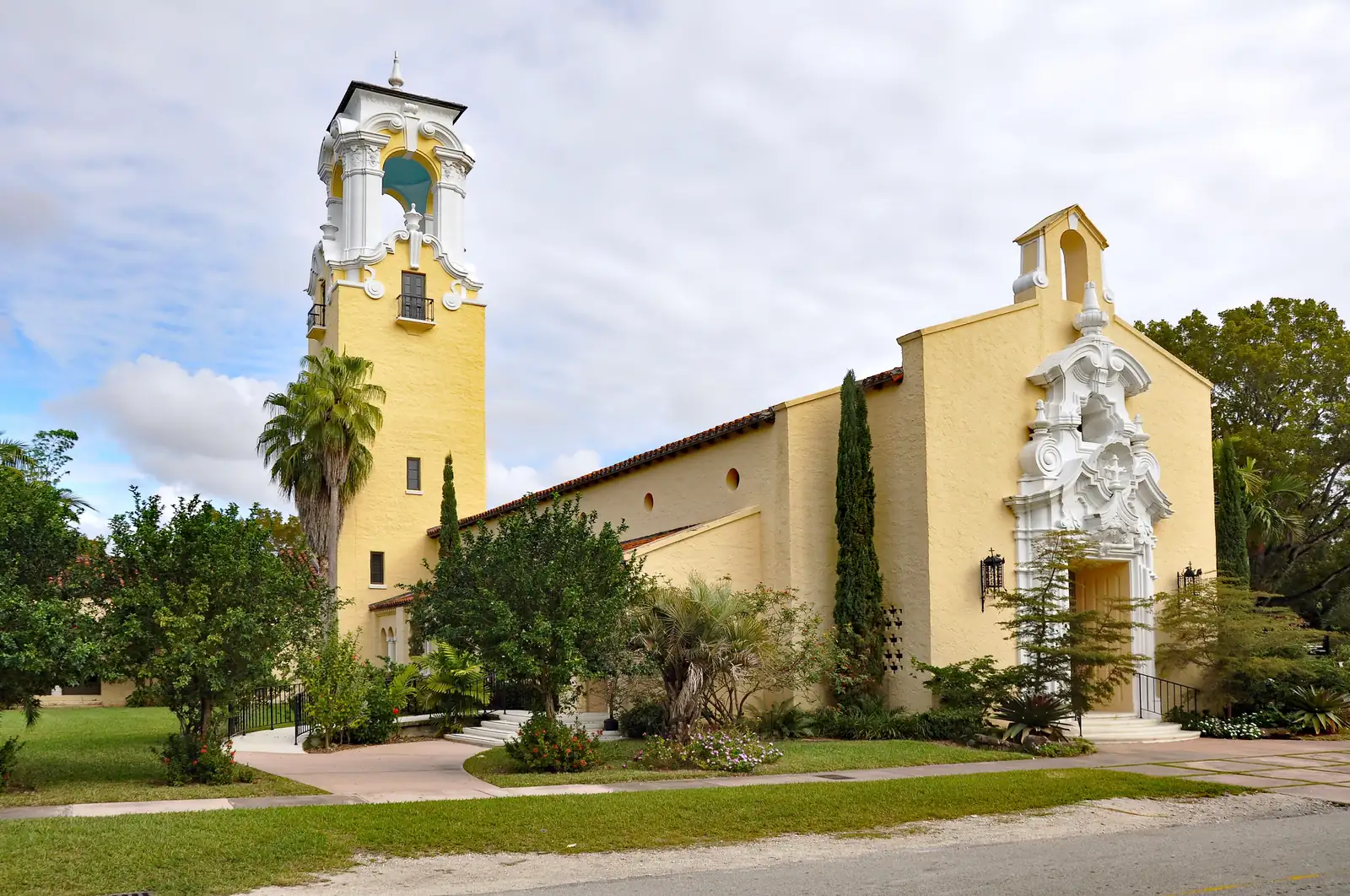
The City says the Coral Gables Congregational Church, designed by Kiehnel and Elliott, was patterned after a cathedral in Mexico and was the first church built in the city, dedicated on Palm Sunday, April 5, 1925. George Merrick, whose father was a Congregational minister, donated the land. The church, now Coral Gables Congregational United Church of Christ at 3010 De Soto Blvd., says its congregation was founded in 1923 and that Merrick built the church to honor his father. It also calls itself the oldest established building and organization in Coral Gables; that is the church’s own claim.
- The City's landmarks page says Coral Gables Congregational Church, designed by Kiehnel and Elliott, "was patterned after a cathedral in Mexico and was the first church built in the city. It was dedicated on Palm Sunday, April 5, 1925." George Merrick, whose father was a Congregational minister, donated the land. City of Coral Gables: Historical Landmarks
- The church says: "Our local church was founded in 1923" and that George Merrick, "the son of a Congregational Minister," built the church "to honor his father." Coral Gables Congregational United Church of Christ: Our History
- Coral Gables Congregational United Church of Christ (Gables UCC) gives its address as "3010 De Soto Blvd. Coral Gables, FL 33134", phone 305.448.7421. Coral Gables Congregational United Church of Christ: home page
The Venetian Pool, 1924
The City says the Venetian Pool opened in 1924 as the Venetian Casino, made from the quarry pit that supplied limestone for early Coral Gables buildings, through the work of Merrick, Denman Fink and Phineas Paist. It is listed on the National Register of Historic Places, and the City says a historical renovation was completed in 1989. Hours and tickets are on our Venetian Pool page.
- The City's Venetian Pool history page: "The Venetian pool was opened in 1924 as the Venetian Casino." It was made from the quarry pit that supplied limestone for early Coral Gables buildings, "through the efforts of Merrick, artist Denman Fink, and architect Phineas Paist." City of Coral Gables: Venetian Pool History
- The City says the Venetian Pool is "included in the National Register of Historic Places, one of a select few swimming pools to have such a designation," and that "In 1989, a historical renovation was completed." City of Coral Gables: Venetian Pool History
The Biltmore, January 1926
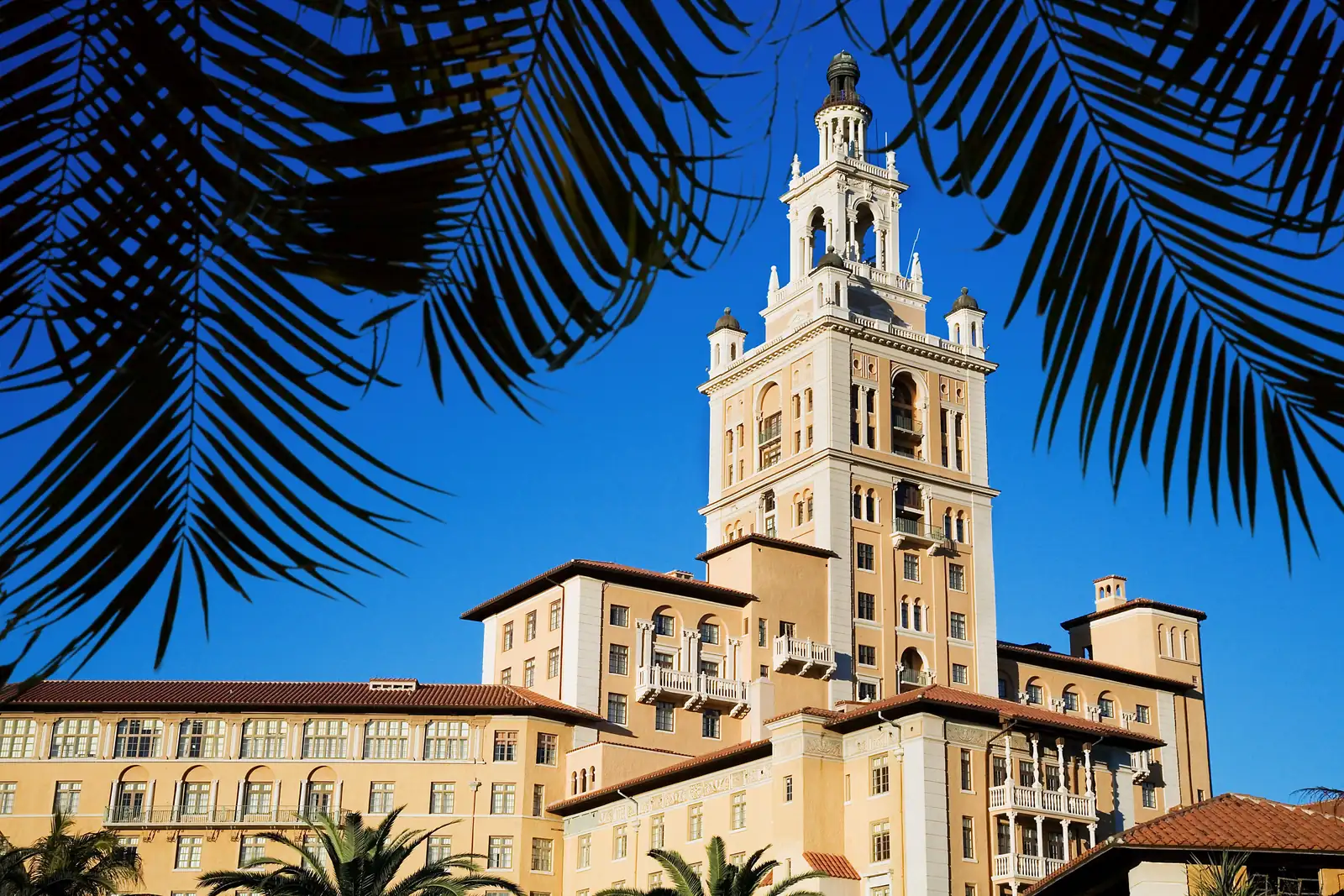
The City says the Biltmore Hotel was designed by Schultze and Weaver, and its 26-story tower is a replica of the Giralda Bell Tower of the Cathedral of Seville, Spain. The hotel says Merrick joined hotel magnate John McEntee Bowman, announced the 10 million dollar project on November 25, 1924, and opened it in January 1926.
It served as an Army hospital in the 1940s and as a Veterans Administration hospital until 1968. The City then took ownership: its landmarks page says it acquired the hotel in 1972, while the hotel says ownership passed to the City in 1973. The hotel says restoration began in 1983 and it reopened in 1987, closed in 1990, and has been run since 1992 by Seaway Hotels Group. More on the Biltmore page.
- The City's landmarks page: the Biltmore Hotel was designed by Schultze and Weaver; "The 26-story tower is a replica of the Giralda Bell Tower of the Cathedral of Seville, Spain"; its grand opening was "in January of 1926." The War Department used it as an army hospital in the 1940s, the VA ran the hospital until 1968, "the City acquired the Biltmore in 1972," and after sitting vacant almost 20 years it "was restored in 1987 as a luxury hotel." City of Coral Gables: Historical Landmarks
- The Biltmore's history page: George E. Merrick joined hotel magnate John McEntee Bowman; "The 10-million-dollar project was announced on November 25, 1924, and in less than 14 months, The Biltmore was unveiled to the public amid great fanfare in January of 1926." The hotel says Merrick called his vision "The City Beautiful." The Biltmore Hotel: About / History
- The Biltmore says it served as an Army Air Forces hospital and early site of the University of Miami's School of Medicine, and remained a Veterans Administration hospital until 1968. "In 1973, the City of Coral Gables was granted ownership of the hotel"; restoration began in 1983 and it "reopened in 1987", closed in 1990, and since 1992 Seaway Hotels Group has operated the resort and golf course. The Biltmore Hotel: About / History
The Old Police and Fire Station
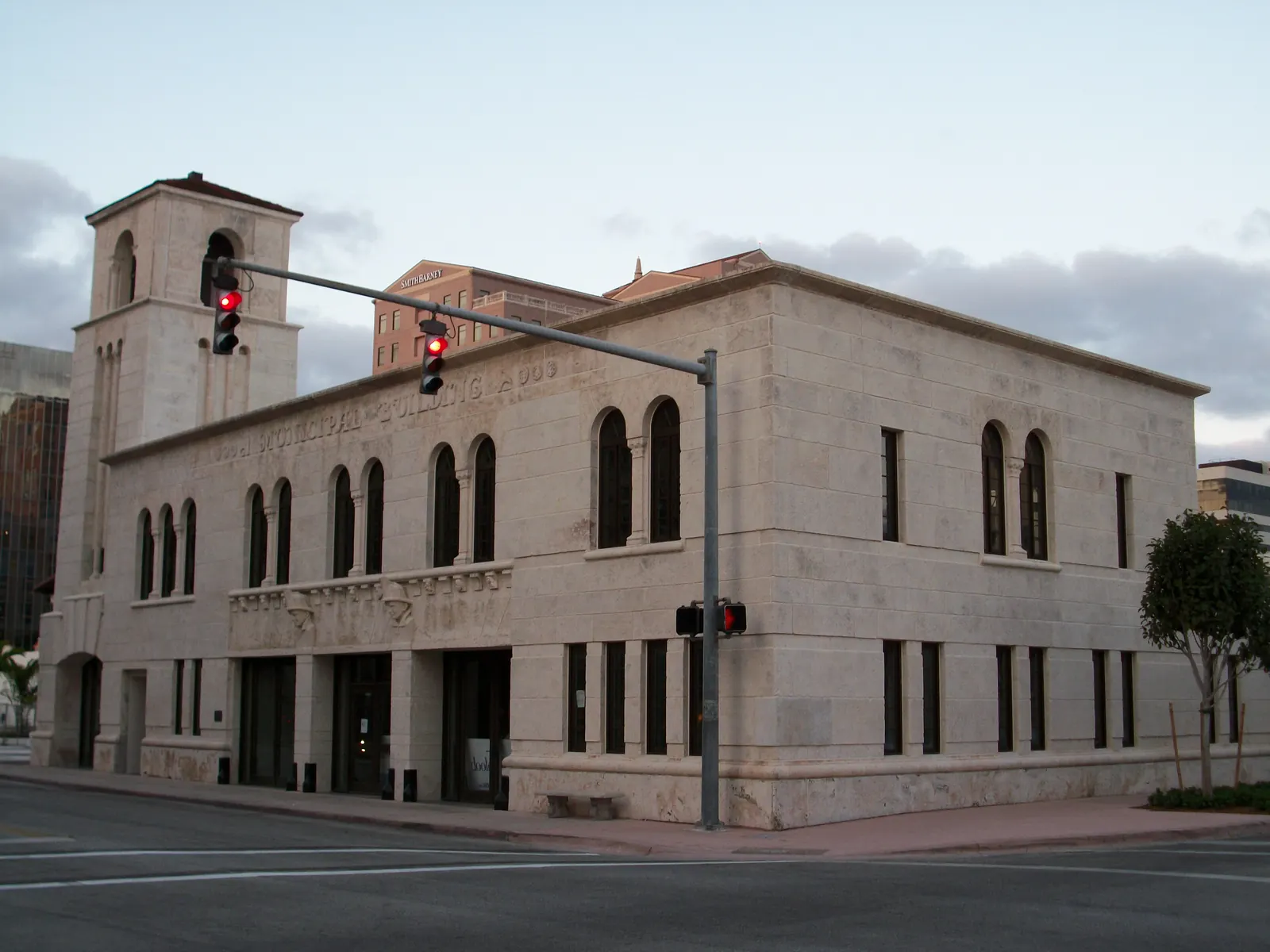
The City says the Old Police and Fire Station was designed by Phineas Paist and built by the Works Project Administration (the City’s wording) as a public safety headquarters. The sculptures over the former fire-truck bays are by Theresa Keller, known as Jon Keller. It now houses the Coral Gables Museum and the City’s Historical Resources Department. See arts and culture.
- The Coral Gables Museum occupies the Old Police and Fire Station, designed by Phineas Paist and built by the Works Project Administration (the City's wording) as a public safety headquarters; per the City it now houses the museum and the offices of the City's Historical Resources Department. Sculptures over the former fire-truck bays are by Theresa Keller ("Jon Keller"). City of Coral Gables: Historical Landmarks
Miracle Mile, named in the 1950s
The City says Merrick’s four-block commercial strip on Coral Way was rebranded as Miracle Mile in the 1950s, and a City summary of a Merrick House talk dates the official name to 1955. The Miracle Theatre on the Mile was built in 1948 and is now Actors’ Playhouse. Our Miracle Mile page has the rest.
- City Miracle Mile page: in the 1940s developers and business owners saw the potential of "the four-block commercial strip of Coral Way between LeJeune and Douglas Road", eventually "in the 1950s rebranding the area as a high-end shopping destination", "Miracle Mile". The City names George K. Zain, who "came to be known as the 'Father of Miracle Mile'", and says a plaque honoring him, dedicated in the 1960s, is at the western entrance. City of Coral Gables: Miracle Mile
- A City Merrick House talk summary says George Merrick's business section was "officially named Miracle Mile in 1955." City of Coral Gables: Merrick House (100 Voices talk summaries)
MacFarlane Homestead Historic District
Not all of Coral Gables history is Mediterranean Revival. The City says the MacFarlane Homestead Historic District was listed in the National Register in 1994 and is the only historic district in Coral Gables listed in the National Register of Historic Places. Most of its houses were built between 1926 and 1939, in a wood frame vernacular type not seen elsewhere in the city, and St. Mary’s Baptist Church was built there in 1926. The free trolley’s Grand Avenue route runs through it.
- The City says the MacFarlane Homestead Historic District "was listed in the National Register in 1994" and "is the only historic district listed in the National Register of Historic Places within the City of Coral Gables." Most houses were built between 1926 and 1939, in a wood frame vernacular type "not seen elsewhere in Coral Gables." St. Mary's Baptist Church was built there in 1926. City of Coral Gables: Historical Landmarks
- City trolley page: "Ponce de Leon runs north and south on Ponce de Leon Boulevard, from Douglas Metrorail Station to Flagler Street." "Grand Avenue runs north and south from Douglas Metrorail Station through the historic McFarlane Homestead District." City of Coral Gables: Trolley
How the City protects its buildings
The City’s guide, Preserving Our Past, says Coral Gables adopted its first historic preservation ordinance in 1973, revised it in 1984 and moved it into the Zoning Code in 2003. A nine-member citizen Historic Preservation Board decides on designations after a public hearing. For local designation a property generally must be at least fifty years old and have architectural, aesthetic or historical value. The City publishes the list of locally designated properties as the Coral Gables Register of Historic Places.
- The City's guide "Preserving Our Past" says Coral Gables "adopted its first Historic Preservation ordinance in 1973", enacted a revised ordinance in 1984, and moved it to the Zoning Code in 2003. The Historic Preservation Board has nine citizen members. City of Coral Gables: Preserving Our Past, A Guide to Historic Preservation in Coral Gables (PDF)
- Per the City's preservation guide, for local designation "Generally the property must be at least fifty (50) years old, and possess architectural, aesthetic or historical value." Any citizen may submit a proposal; the Historic Preservation Board decides after a public hearing. City of Coral Gables: Preserving Our Past (PDF)
- The City publishes a list titled "Locally Designated Properties Through 07-16-26" for the "Coral Gables Register of Historic Places", marking non-contributing properties "(NC)". The City's preservation guide calls the Register "a listing of locally designated buildings and districts significant to Coral Gables' history." City of Coral Gables: Locally Designated Properties
Owners of designated buildings need a Certificate of Appropriateness before most exterior work. Minor work such as re-roofing, painting and in-kind repairs may be handled by staff; additions, demolitions and major exterior remodels go to the Board. The City’s Historical Resources and Cultural Arts department, at 2327 Salzedo Street, runs designation, design review and the City’s archives. If you are thinking of buying an older house, read living in Coral Gables.
- The City's guide: "A COA is required before most exterior work begins, before a building permit can be issued, and before any variance can be granted. Some proposals that are considered to be maintenance do not require COA review." Minor work ("re-roofing, painting; repairs in-kind") may be handled by staff; substantial work ("an addition, a demolition, a major exterior remodeling") goes to the Historic Preservation Board at a public hearing. City of Coral Gables: Preserving Our Past (PDF)
- The City's Historical Resources and Cultural Arts department "Promotes the historic heritage of the city through the local historic designation and design review process," manages city-owned historic properties and the archives, and runs the Cultural Grants and Art in Public Places programs. Contact: hist@coralgables.com, 305-460-5093, 2327 Salzedo Street, Second floor, Coral Gables, FL 33134. City of Coral Gables: Historical Resources and Cultural Arts
What we left out
No primary page we read gives a date or designer for the De Soto Fountain or the Alhambra Water Tower, so we give none. We also do not repeat claims about which pool or hotel is the only or the largest of its kind. To walk these sites in a day, see things to do or the day planner.
History FAQ
What is Coral Gables?
A city in Miami-Dade County, Florida. The City says it was incorporated on April 29, 1925. George Merrick planned it on his family's land, and by early 1921 it was "wholly mapped out on paper."
Why is it called Coral Gables?
The City says the Merricks built an addition to their home out of coral rock quarried from what later became the Venetian Pool. They named the house "Coral Gables" and their grapefruit groves the "Coral Gables Plantation."
Why is Coral Gables called the City Beautiful?
The Biltmore Hotel says George Merrick called his vision for Coral Gables "The City Beautiful." The City uses the name too: "Experience the rich history of the City Beautiful."
Source: City of Coral Gables: Historical Landmarks; The Biltmore Hotel: About
Who designed Coral Gables?
The City credits George Merrick's team. Denman Fink was art director and designed landmarks such as the Venetian Pool, City Hall and the entrances. Phineas Paist, the supervising architect, saw the designs through. Landscape architect Frank Button laid out the winding drives and boulevards.
Who built the early buildings?
The City says much of Coral Gables went up between 1921 and 1926. It says "a significant portion" of the workers "were stonemasons from the Bahamas who were experts in coral rock construction."
What are the Coral Gables entrances?
The City says that "Of the eight planned entrances, only four were completed." One of them is the Douglas Entrance (La Puerta del Sol), built between 1925 and 1927. Charles Merrick built the Granada and Alhambra Entrances.
When was City Hall built, and where is it?
The City says City Hall was built from 1927 through 1928 in the Mediterranean Revival style, from native oolitic limestone. The address is 405 Biltmore Way.
Source: City of Coral Gables: Farmers Market at Merrick Park; City of Coral Gables: Historical Landmarks
Can I tour Merrick House?
Yes, on weekends. The City says tours run Saturday and Sunday at 1, 2 and 3 p.m. No reservation is needed, and tours are cash only. The house is at 907 Coral Way.
What is the Coral Gables Congregational Church?
The City says it was "the first church built in the city," dedicated on Palm Sunday, April 5, 1925, on land George Merrick donated. The church gives its address as 3010 De Soto Blvd.
Is there a National Register historic district in Coral Gables?
The City says the MacFarlane Homestead Historic District was listed in 1994. It calls it "the only historic district listed in the National Register of Historic Places within the City of Coral Gables."
How old is the Venetian Pool?
The City's history page says it "was opened in 1924 as the Venetian Casino." It was built in the quarry that supplied limestone for early Coral Gables buildings.
When did the Biltmore open?
The hotel says it opened "in January of 1926," less than 14 months after it was announced on November 25, 1924. The City's history page gives January 15, 1926.
What is the Biltmore's tower modeled on?
The City says the 26-story tower "is a replica of the Giralda Bell Tower of the Cathedral of Seville, Spain."
Was the Biltmore ever a hospital?
Yes. The hotel says it was an Army Air Forces hospital and then a Veterans Administration hospital until 1968. It says the City was granted ownership in 1973 and the hotel reopened in 1987.
Why is it called Miracle Mile?
The City says the four-block stretch of Coral Way was rebranded as "Miracle Mile" in the 1950s. A City talk summary says it was "officially named Miracle Mile in 1955."
Is my house historic? What do I need for exterior work?
The City keeps a list of locally designated properties. Its guide says a Certificate of Appropriateness "is required before most exterior work begins" on a designated property. Contact Historical Resources at 305-460-5093.
Does historic designation raise property taxes?
The City's guide says designated properties "are not subject to increased property taxes solely because of their designation." Approved improvements may qualify for a ten-year exemption on their added value.
Dates, rules and hours can change. The organisers have the final word: City of Coral Gables (official site)